
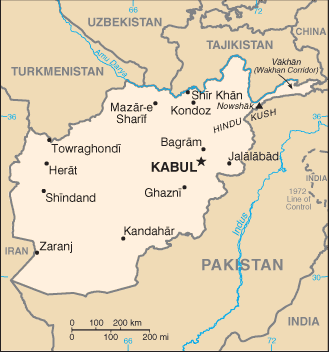
Source: C.I.A. World Factbook
In the early months of 2002, the United States and coalition forces drove out the Taliban, an extreme Islamic militant group who provide safe haven for Osama Bin Laden and al-Qaeda, who carried out the attacks on the World Trade Center and the Pentagon on September 11, 2001. The U.S. took the lead in reconstruction efforts and continues, with U.N. peacekeepers and coalition force as well as with the Afghan Governments, to wage a counter-insurgency campaign against Taliban fighters returning from their sanctuaries in Pakistan. The Taliban came to power in 1996 after Soviet forces withdrew after their decade-long war to support a weak puppet government. We will necessarily deal a lot with the Taliban and liked minded people when addressing human rights in Afghanistan.
Here is your training manual on Women’s Rights in Afghanistan. If I were you I would be familiar with these resources before you travel.
Pertinent Articles in the United Nations Universal Declaration of Human Rights
- Article 1. All human beings are born free and equal in dignity and rights. They are endowed with reason and conscience and should act towards one another in a spirit of brotherhood.
- Article 2. Everyone is entitled to all the rights and freedoms set forth in this Declaration, without distinction of any kind, such as race, colour, sex, language, religion, political or other opinion, national or social origin, property, birth or other status. Furthermore, no distinction shall be made on the basis of the political, jurisdictional or international status of the country or territory to which a person belongs, whether it be independent, trust, non-self-governing or under any other limitation of sovereignty.
- Article 3. Everyone has the right to life, liberty and security of person.
- Article 4. No one shall be held in slavery or servitude; slavery and the slave trade shall be prohibited in all their forms.
- Article 5. No one shall be subjected to torture or to cruel, inhuman or degrading treatment or punishment.
- Article 16. Men and women of full age, without any limitation due to race, nationality or religion, have the right to marry and to found a family. They are entitled to equal rights as to marriage, during marriage and at its dissolution. Marriage shall be entered into only with the free and full consent of the intending spouses.
U.N. Convention of the Rights of the Child - Article 34 (Sexual exploitation). Governments should protect children from all forms of sexual exploitation and abuse.
U.N. Declaration on the Elimination of Violence against Women
- Article 1 For the purposes of this Declaration, the term "violence against women" means any act of gender-based violence that results in, or is likely to result in, physical, sexual or psychological harm or suffering to women, including threats of such acts, coercion or arbitrary deprivation of liberty, whether occurring in public or in private life.
- Article 2 Violence against women shall be understood to encompass, but not be limited to, the following:
(a) Physical, sexual and psychological violence occurring in the family, including battering, sexual abuse of female children in the household, dowry-related violence, marital rape, female genital mutilation and other traditional practices harmful to women, non-spousal violence and violence related to exploitation;
(b) Physical, sexual and psychological violence occurring within the general community, including rape, sexual abuse, sexual harassment and intimidation at work, in educational institutions and elsewhere, trafficking in women and forced prostitution;
(c) Physical, sexual and psychological violence perpetrated or condoned by the State, wherever it occurs.
*For the full text of the declaration, go to the University of Minnesota’s Center for Human Rights, http://www1.umn.edu/humanrts/instree/women/engl-wmn.html.
You might also consider relevant articles in the Convention on the Elimination of All Forms of Discrimination Against Women, http://www.un.org/womenwatch/daw/cedaw/cedaw.htm.
Afghanistan was founded in 1747 by Ahmad Shah, who unified the Pashtun tribes living in the mountainous area along the Pakistani border. Pashtu speakers represent about half the total population of the country, but an equal number of Afghans speak Dari (Afghan Persian), mostly from the western regions along the border with Iran. Turkic languages make up 11%, and the remaining population falls into 30 minor language groups. Major tribal groups are divided roughly into the following percentages of a total population of 32 million: Pashtun 42%, Tajik 27%, Hazara 9%, Uzbek 9%, Aimak 4%, Turkmen 3%, and Baloch 2%, and other smaller groups. Most Afghans are at least bilingual, but many speak several languages.
For a brief history of Afghanistan, please refer to U.S. State Department country reports or the C.I.A. World Factbook from their respective websites. Also see the BBC News country profile, http://www.bbc.co.uk/news/world-south-asia-12011352.
About 80% of Afghans follow Sunni religious traditions, the rest are S’hia Muslim.
The focus of this training mission is to investigate abuses of women in a tribal area near Kabul. Most tribal groups have maintained traditional roles for women for centuries, but in the last few decades, many received university educations and became teachers, nurses, doctors, and lawyers. Beginning in 1996, the Taliban expelled women from universities and closed schools for girls. Women were not allowed to work outside the home. The Taliban also required women to wear the burqa. Women who defied Taliban decrees were savagely beaten and often killed.
Since the defeat of the Taliban, schools and universities have reopened for girls and young women, but many tribal councils and patriarchal households continue to repress the rights of women. Although women have enjoyed new freedoms in Kabul, they continued to suffer beatings, humiliation, and public floggings in smaller cities and rural areas. With increasing incursions of Taliban fighters, the repression of girls and women has increased.
Recent press reports highlight the problems women face, especially in remote areas outside the control of U.N. forces. One prominent Afghan human rights organization documented over 1,500 acts of violence against women in 2006, including rapes, murders, public floggings, and “honor killings.” Recently two women journalists were killed in the Kabul area. Reports of domestic violence have increased, and a few weeks ago two young girls were killed on their way home from school.
For recent reports on violence against women, see the BBC piece, “Women under siege in Afghanistan” (http://news.bbc.co.uk/2/hi/south_asia/6755799.stm) and related articles. For more detailed analysis, see Barry Bearak, “As War Enters Classrooms, Fear Grips Afghans,” New York Times, July 10, 2007. You should also read Abdul Waheed Wafa’s article, “Afghans Seek Men Who Killed Broadcaster as She Slept,” New York Times, June 7, 2007. The Times articles are free for Times-Select subscribers. You can also access them at no charge on the UNCG library database, Lexis-Nexis.
It is also important for you to keep in mind that there has been a strong critique of the use of human rights discourse in the United States to “save” or “protect” Afghan women as an excuse for American military intervention in Afghanistan. In brief, the critiques charge that “Afghan women” serve as a rationale for war that masks broader imperialist aims, such as control over oil pipelines in Afghanistan and that human rights reports about Afghan women rarely consider the costs of war on civilian populations (including those very women whose rights are violated by the Taliban).
Books and Articles
Holly Edwards, “Afghan Girl,” Beautiful Suffering: Photography and the Traffic in Pain (Chicago: University of Chicago Press, 2007.
Amy Farrell and Patrice McDermott, “Claiming Afghan Women: The Challenge of Human Rights Discourse for Transnational Feminism,” Just Advocacy? Women’s Human Rights, Transnational Feminism, and the Politics of Representation (New Brunswick NJ: Rutgers University Press, 2005).
John Follain, Zoya's Story: An Afghan Woman's Struggle for Freedom.. William Morrow, March 2002. ISBN-10: 0060097825
Latifa, My Forbidden Face: Growing Up Under the Taliban: A Young Woman's Story. Miramax, July 2003. ISBN-10: 1401359256
Khaled Hosseini, A Thousnad Splendid Suns. Riverhead, May 2007. ISBN-10: 1594489505
Films
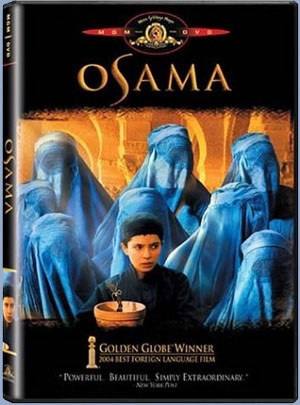
Osama, Siddiq Barmak. MGM 2004. http://imdb.com/find?s=all&q=osama
Web Resources
The C.I.A. World Factbook - https://www.cia.gov/library/publications/the-world-factbook/geos/af.html
The Library of Congress Portals to the World – general information, http://www.loc.gov/rr/international/amed/afghanistan/afghanistan.html
Feminist Majority Foundation. The Taliban and Afghan Women (http://www.feminist.org/afghan/facts.html). Provides background information on the Taliban and women in Afghanistan.
RAWA, the Revolutionary Association of the Women of Afghanistan (http://www.rawa.org/) RAWA was established in Kabul, Afghanistan, in 1977 as an independent political/social organization of Afghan women fighting for human rights and for social justice in Afghanistan.
WAPHA (http://www.angelfire.com/on/wapha/facts.html) Women’s Alliance for Peace and Human Rights in Afghanistan – a Washington, D.C.-based organization documenting the human rights abuses of women in Afghanistan. The Web site features information about the group and its mission, news reports and links to the Afghan online press, a photo gallery, and poems and art.
See also: Amnesty International's "Afghanistan: Women's Rights are Non-Negotiable," an activist's guide. http://takeaction.amnestyusa.org/atf/cf/%7B4abebe75-41bd-4160-91dd-a9e121f0eb0b%7D/AFGHAN_WOMENS_RIGHTS_ACTIVIST_GUIDE_2013.PDF
A timeline of women's rights in Afghanistan: http://www.pbs.org/wnet/women-war-and-peace/uncategorized/timeline-of-womens-rights-in-afghanistan/
A Human Rights Watch article: Afghanistan: Failing Commitments to Protect Women's Rights http://www.hrw.org/news/2013/07/11/afghanistan-failing-commitments-protect-womens-rights
The Constitution of Afghanistan: http://www.afghan-web.com/politics/current_constitution.html
For other international women’s human rights declarations and conventions, go to: http://www1.umn.edu/humanrts/instree/auoe.htm.
You can find many other news and scholarly articles on women in Afghanistan. Just be sure you are choosing the best—most reputable—sources available.