
The following training manual is comprised of reports filled by agents H. A. Brown, Suzanne Fitzgerald, Wayne Barr, and Cassandra Bumpas.
Pertinent articles from U.N. protocols on children in armed conflict and from the U.N. Convention of the Rights of the Child
*For an excellent article on Children in Conflict and Emergencies, go to http://www.unicef.org/protection/index_armedconflict.html.
To view the full text on the U.N. protocols on the involvement of children in armed conflict, see the Convention on the Rights of the Child. An important addition to this document is the Optional Protocol: http://www.ohchr.org/EN/ProfessionalInterest/Pages/OPACCRC.aspx.
In addition, a fuller list of legal instruments pertaining to children's human rights is available at: http://www.hrea.org/index.php?base_id=81
Article 1
States Parties shall take all feasible measures to ensure that members of their armed forces who have not attained the age of 18 years do not take a direct part in hostilities.
Article 2
States Parties shall ensure that persons who have not attained the age of 18 years are not compulsorily recruited into their armed forces.
Article 3
1. States Parties shall raise the minimum age for the voluntary recruitment of persons into their national armed forces from that set out in article 38, paragraph 3, of the Convention on the Rights of the Child, taking account of the principles contained in that article and recognizing that under the Convention persons under the age of 18 years are entitled to special protection.
2. Each State Party shall deposit a binding declaration upon ratification of or accession to the present Protocol that sets forth the minimum age at which it will permit voluntary recruitment into its national armed forces and a description of the safeguards it has adopted to ensure that such recruitment is not forced or coerced.
3. States Parties that permit voluntary recruitment into their national armed forces under the age of 18 years shall maintain safeguards to ensure, as a minimum, that:
(a) Such recruitment is genuinely voluntary;
(b) Such recruitment is carried out with the informed consent of the person's parents or legal guardians;
(c) Such persons are fully informed of the duties involved in such military service;
(d) Such persons provide reliable proof of age prior to acceptance into national military service.
Article 4
1. Armed groups that are distinct from the armed forces of a State should not, under any circumstances, recruit or use in hostilities persons under the age of 18 years.
2. States Parties shall take all feasible measures to prevent such recruitment and use, including the adoption of legal measures necessary to prohibit and criminalize such practices.
3. The application of the present article shall not affect the legal status of any party to an armed conflict.
Article 5
Nothing in the present Protocol shall be construed as precluding provisions in the law of a State Party or in international instruments and international humanitarian law that are more conducive to the realization of the rights of the child.
A summary of the rights under the Convention on the Rights of the Child
- Article 1 (Definition of the child): The Convention defines a 'child' as a person below the age of 18, unless the laws of a particular country set the legal age for adulthood younger. The Committee on the Rights of the Child, the monitoring body for the Convention, has encouraged States to review the age of majority if it is set below 18 and to increase the level of protection for all children under 18.
- Article 2 (Non-discrimination): The Convention applies to all children, whatever their race, religion or abilities; whatever they think or say, whatever type of family they come from. It doesn’t matter where children live, what language they speak, what their parents do, whether they are boys or girls, what their culture is, whether they have a disability or whether they are rich or poor. No child should be treated unfairly on any basis.
- Article 3 (Best interests of the child): The best interests of children must be the primary concern in making decisions that may affect them. All adults should do what is best for children. When adults make decisions, they should think about how their decisions will affect children. This particularly applies to budget, policy and law makers.
- Article 4 (Protection of rights): Governments have a responsibility to take all available measures to make sure children’s rights are respected, protected and fulfilled. When countries ratify the Convention, they agree to review their laws relating to children. This involves assessing their social services, legal, health and educational systems, as well as levels of funding for these services. Governments are then obliged to take all necessary steps to ensure that the minimum standards set by the Convention in these areas are being met. They must help families protect children’s rights and create an environment where they can grow and reach their potential. In some instances, this may involve changing existing laws or creating new ones. Such legislative changes are not imposed, but come about through the same process by which any law is created or reformed within a country. Article 41 of the Convention points out the when a country already has higher legal standards than those seen in the Convention, the higher standards always prevail.
- Article 5 (Parental guidance): Governments should respect the rights and responsibilities of families to direct and guide their children so that, as they grow, they learn to use their rights properly. Helping children to understand their rights does not mean pushing them to make choices with consequences that they are too young to handle. Article 5 encourages parents to deal with rights issues "in a manner consistent with the evolving capacities of the child". The Convention does not take responsibility for children away from their parents and give more authority to governments. It does place on governments the responsibility to protect and assist families in fulfilling their essential role as nurturers of children.
- Article 6 (Survival and development): Children have the right to live. Governments should ensure that children survive and develop healthily.
- Article 7 (Registration, name, nationality, care): All children have the right to a legally registered name, officially recognised by the government. Children have the right to a nationality (to belong to a country). Children also have the right to know and, as far as possible, to be cared for by their parents.
- Article 8 (Preservation of identity): Children have the right to an identity – an official record of who they are. Governments should respect children’s right to a name, a nationality and family ties.
- Article 9 (Separation from parents): Children have the right to live with their parent(s), unless it is bad for them. Children whose parents do not live together have the right to stay in contact with both parents, unless this might hurt the child.
- Article 10 (Family reunification): Families whose members live in different countries should be allowed to move between those countries so that parents and children can stay in contact, or get back together as a family.
- Article 11 (Kidnapping): Governments should take steps to stop children being taken out of their own country illegally. This article is particularly concerned with parental abductions. The Convention’s Optional Protocol on the sale of children, child prostitution and child pornography has a provision that concerns abduction for financial gain.
- Article 15 (Freedom of association): Children have the right to meet together and to join groups and organisations, as long as it does not stop other people from enjoying their rights. In exercising their rights, children have the responsibility to respect the rights, freedoms and reputations of others.
- Article 19 (Protection from all forms of violence): Children have the right to be protected from being hurt and mistreated, physically or mentally. Governments should ensure that children are properly cared for and protect them from violence, abuse and neglect by their parents, or anyone else who looks after them. In terms of discipline, the Convention does not specify what forms of punishment parents should use. However any form of discipline involving violence is unacceptable. There are ways to discipline children that are effective in helping children learn about family and social expectations for their behaviour – ones that are non-violent, are appropriate to the child's level of development and take the best interests of the child into consideration. In most countries, laws already define what sorts of punishments are considered excessive or abusive. It is up to each government to review these laws in light of the Convention.
- Article 20 (Children deprived of family environment): Children who cannot be looked after by their own family have a right to special care and must be looked after properly, by people who respect their ethnic group, religion, culture and language.
- Article 22 (Refugee children): Children have the right to special protection and help if they are refugees (if they have been forced to leave their home and live in another country), as well as all the rights in this Convention.
- Article 23 (Children with disabilities): Children who have any kind of disability have the right to special care and support, as well as all the rights in the Convention, so that they can live full and independent lives.
- Article 24 (Health and health services): Children have the right to good quality health care – the best health care possible – to safe drinking water, nutritious food, a clean and safe environment, and information to help them stay healthy. Rich countries should help poorer countries achieve this.
- Article 25 (Review of treatment in care): Children who are looked after by their local authorities, rather than their parents, have the right to have these living arrangements looked at regularly to see if they are the most appropriate. Their care and treatment should always be based on “the best interests of the child”. (see Guiding Principles, Article 3)
- Article 26 (Social security): Children – either through their guardians or directly – have the right to help from the government if they are poor or in need.
- Article 27 (Adequate standard of living): Children have the right to a standard of living that is good enough to meet their physical and mental needs. Governments should help families and guardians who cannot afford to provide this, particularly with regard to food, clothing and housing.
- Article 28: (Right to education): All children have the right to a primary education, which should be free. Wealthy countries should help poorer countries achieve this right. Discipline in schools should respect children’s dignity. For children to benefit from education, schools must be run in an orderly way – without the use of violence. Any form of school discipline should take into account the child's human dignity. Therefore, governments must ensure that school administrators review their discipline policies and eliminate any discipline practices involving physical or mental violence, abuse or neglect. The Convention places a high value on education. Young people should be encouraged to reach the highest level of education of which they are capable.
- Article 29 (Goals of education): Children’s education should develop each child’s personality, talents and abilities to the fullest. It should encourage children to respect others, human rights and their own and other cultures. It should also help them learn to live peacefully, protect the environment and respect other people. Children have a particular responsibility to respect the rights their parents, and education should aim to develop respect for the values and culture of their parents. The Convention does not address such issues as school uniforms, dress codes, the singing of the national anthem or prayer in schools. It is up to governments and school officials in each country to determine whether, in the context of their society and existing laws, such matters infringe upon other rights protected by the Convention.
- Article 32 (Child labour): The government should protect children from work that is dangerous or might harm their health or their education. While the Convention protects children from harmful and exploitative work, there is nothing in it that prohibits parents from expecting their children to help out at home in ways that are safe and appropriate to their age. If children help out in a family farm or business, the tasks they do be safe and suited to their level of development and comply with national labour laws. Children's work should not jeopardize any of their other rights, including the right to education, or the right to relaxation and play.
- Article 33 (Drug abuse): Governments should use all means possible to protect children from the use of harmful drugs and from being used in the drug trade.
- Article 34 (Sexual exploitation): Governments should protect children from all forms of sexual exploitation and abuse.
- Article 35 (Abduction, sale and trafficking): The government should take all measures possible to make sure that children are not abducted, sold or trafficked.
- Article 36 (Other forms of exploitation): Children should be protected from any activity that takes advantage of them or could harm their welfare and development.
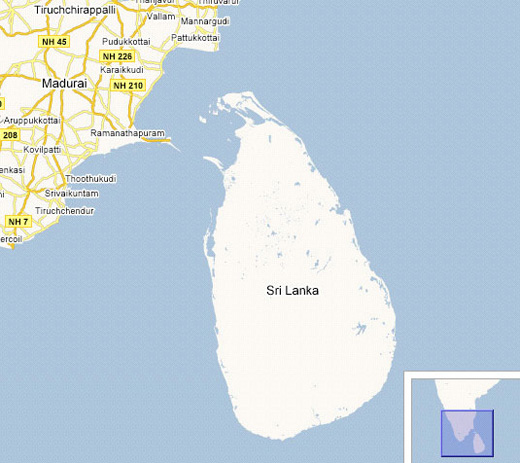
The conflict in Sri Lanka between the Sinhalese Buddhist majority and the Tamilian Hindu minority has roots in the ancient world, British imperialism, and the modern political and economic situation on the island. The Sinhalese first migrated from India to Sri Lanka in the Fifth Century BCE. Tamil populations migrated to Sri Lanka as early as the Third Century but their population was increased by huge amounts when the British Empire used Tamil laborers to work the islands tea plantations.
In the1940s and 50s, after independence from Britain, a huge increase in Sinhalese nationalism included the development of democracy but also the disenfranchisement of the Tamil minority. Presidential elections were often followed with violence. In 1976 the Liberation Tigers of Tamil Eelam formed. They are often referred to as the Tamil Tigers.
In Hinduism water as a feminine element contrasts with fire as a masculine one, a polarity like that of Tamilians and Sinhalese and their nationalistic ambitions for Sri Lanka. Yet water and fire form a synergy in Hindu belief in the same way as Purusha (the divine masculine) and Prakriti (the divine feminine) provide the balance of all things. Until recent attempts to reconcile, growth of Sinhala ethnonationalism -- following Britain’s withdrawal along with Sinhalese becoming the official language and a revival in Buddhism -- teamed up with Indian military forces to prevent the Tamil minority from claiming a sovereign state. Without a sense of belonging, ethnic harmony askew, hostility between Tamil Elam insurgents and Sinhalese government soldiers keeps Sri Lanka out of political, economic and social sync.
The Tamil Tigers have been implicated in and claimed credit for a variety of terrorist activities including assassinating a Sri Lankan president. Similarly, the government has been accused of targeting civilians in warfare. We also have information that the Tamils continued to recruit children, boys and girls, into their ranks. http://news.bbc.co.uk/2/hi/south_asia/6916291.stm
The violence in Sri Lanka came to an official end in May 2009, when the government captured the last Tamil-controlled areas in the northeast. However, there are additional reports of extraordinary atrocities committed by both sides of the conflict in the war's final months. The government is accused of indiscriminate shelling of civilians; and the Tamil Tigers are accused of having used civilians as human shields. http://www.bbc.co.uk/news/world-south-asia-11393458.
In March 2012, the UN Human Rights Council adopted a resolution calling for an investigation of these allegations of atrocity as well as those that occurred during the decades-long conflict. Your mission is in response to that resolution. Keep in mind, however, that the government rejected this resolution as a violation of its sovereignty.
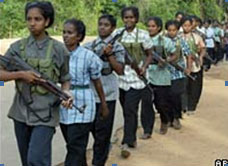
The issue of child soldiers is at the top of your agenda. Young people are more easily manipulated and more trusting than most adults. Children want to please. They long for affection, kindness, and compassion from adults. When these ideals are missing from their environment, young people will be drawn to anyone or group that offers some comfort and consolation. When displaced, children become more amenable to the philosophy and rhetoric of dissents or rebels. Author Jessica Weisback explains the correlation between nature and nurture and the consequences of a disconnect: …when one grows up in an environment that includes care and nurture, it fosters feelings associated with security, safety, relaxation, warmth and affection. In environments that do not support these characteristics, one grows up with feelings that lead to…anxiety. This anxiety is characterized by feelings of disconnectedness, fragmentation, and terrifying feelings. To defend against this anxiety, one creates relationships of superficial imitation of others who seem to experience life in more solid ways.
The Tamil Tigers were similar to other terrorist groups. They recruited disillusioned young people. They fed on the tension generated by nationalism and ethnic tensions. These conflicts are heightened by cultural, language, ethnic and national differences. http://www.unhcr.org/refworld/country,,CSCOAL,,LKA,,486cb131c,0.html.
According to numerous human rights organizations, UNICEF, governmental departments like the U.S. State Department and non-governmental organizations as the International Committee of the Red Cross, Third World insurgency movements and paramilitary groups and state armies and militias have experienced a spurt of growth in the number of child combatants under eighteen in their service. Despite efforts to make countries and insurgencies accountable under global resolutions and agreements, “an estimated quarter of a million children, even as young as age 6, have been conscripted to serve a soldiers in dozens of armed conflicts around the world, some with armed insurgencies . . . Some in regular armies . . .”
Whether employed as soldiers, human mine detectors, messengers, guards, spies, suicide bombers or sex slaves in countries like Sri Lanka, Uganda, Philippines, Myanmar and Colombia, children combatants make up a sizeable portion of revolutionary insurgencies or government-supported armies. For example, during the Liberian Civil War many units were composed exclusively of children (21% of the combatants disarmed after the Abuja Peace Accords were children under seventeen). In light of the 1990s, Taylor-triggered civil war and the number of child soldiers killed (estimated at 50,000), left maimed or orphaned, humanitarian and international attempts to intervene and rehabilitate child soldiers went unheeded as government and rebel forces conscripted kids into service during the recent Liberians United for Reconciliation and Democracy offensive. In Colombia, 12,000 to 15,000 child combatants are believed by the Colombian Family Welfare Institute to be employed by guerilla and paramilitary forces in their struggle against one another or in collusion against the government and outside forces like the CIA. UNICEF contends that approximately the same number of child combatants in Uganda’s Lord Resistance Army were coerced into becoming insurgents. Obviously no insurgent movement or government would admit to using children in conflict, but the millions of witnesses who have come forward and the independent investigations by oversight and relief agencies attest to a horrendous problem with disturbing repercussions.
As the nature of war has changed so, too, the means and ends. Regional in scope and longer in duration, wars are fought from apartment windows or behind courtyards walls, in crowded streets and lush countrysides by insurgents with makeshift, roadside bombs, AK-47s, machetes or stones against other rebels with the same arms dealer or governmental forces with access to cluster bombs. Distinguishing between combatants and noncombatants becomes blurred; professional armies almost obsolete. In a post-Cold War world it is more common to see struggles between military and civilians in the same country or between hostile groups of armed civilians. Yet, as more and more wars become internal affairs they last longer and succeed in fomenting generational revenge. As Special Representative of the U.N. Secretary-General for Children in Armed Conflict, Radhika Coomaraswamy, pointed out on NPR during the Israel and Hezbollah war:
“We’re finding children exposed to violence are more likely to commit violence – 1,000 times more likely than those who have not seen violence being used. And I think these kinds of psycho-social impacts on children is also something that we have to think about. I mean, if we think about it, each generation in the Middle East gets more violent as we move on . . . And I think it’s directly linked to what they see in their predecessors . . .”
Aside from generational violence setting a precedent, most young children in poor and troubled countries find that dreadful situations do not afford the ease of choice. Many join insurgency movements out of economic necessity for themselves or their families. If not for survival reasons they are forcibly conscripted, intimidated, coerced, “press-ganged,” or yield to peer pressure. Seeking revenge also provides a powerful stimulus to joining an insurgency. For the Maoist People’s Liberation Army in Nepal recruiting in schools was the means by which they filled their ranks. Child soldiers who are part of the Moro Islamic Liberation Front in the Philippines are pressured by their relatives to join as part of the family’s assumed obligation (or else suffer a murderous consequence). And, it is not uncommon for Colombian insurgencies to give a village an expected quota of young people to join up or suffer a fatal fate. The Sudan government’s forced conscription of young boys or the recent actions of a rival force to the Tamil Tigers, the Karuna Group, to kidnap children – while publicly denying such action – are frequent. But the best recruiting tool for most insurgency movements has been the chaos they create in a country suffering economic stress, cultural and social anxiety: death and dearth, displacement and orphans, fear and violence.
Estimates of the number of child soldiers within Tiger of Tamil Eelam and the splinter Karuna groups since 2002 are in the thousands. Although the Tamil Tigers might not have planned attacks on civilians, they accepted the loss of innocent bystanders killed as a result of war as an unavoidable cost of war.
The interplay of culture, language ethnicity and nationalism in terrorist causes can be considered the foundation of their unity and purpose. The extremists desire to build a nation where their culture will be the dominant culture respecting the values and concerns of those they represent. The desire is to establish a state where their language, culture and ethnicity will rule was also the goal of the Tamil Tigers.

Books and Articles about the civil war while it was occurring:
UNHRC Child Soldiers Global Report 2008 – Sri Lanka, http://www.unhcr.org/refworld/country,,CSCOAL,,LKA,,486cb131c,0.html
John Richardson, Paradise Poisoned: Learning About Conflict, Terrorism and Development from Sri Lanka's Civil Wars. International Centre for Ethnic Studies, March 2005
ISBN: 9555800944http://www.state.gov/t/pm/64481.htm
http://news.bbc.co.uk/2/hi/programmes/from_our_own_correspondent
/2256215.stmhttp://news.bbc.co.uk/2/hi/south_asia/6943642.stm
http://www.nytimes.com/2007/09/03/world/asia/03lanka.html?_r=1&oref=slogin
As in the other expeditions, you should have no trouble finding other first-hand accounts as well as scholarly essays. Remember that your sources must be highly reputable, or your report will not be taken seriously.
Film and video:
“The Terrorist,” Dir. Santosh Sivan, 110 min.
Female Suicide bombers from the Tamil Tigers (LTTE) http://www.youtube.com/watch?v=s5sL-qYOytU